Love GTA 6? Here’s What You Should Study to Build Games Like It

Blog Profile Image

Tarang Patel

icon image

18/11/2026

icon image

40 Views

icon image

0

Blog Profile Image

Tarang Patel

icon image

18/11/2026

icon image

40 Views

icon image

0

Love playing GTA 6? Explore the degrees, universities and skills needed to build video games, from game development and computer science to animation, game design and artificial intelligence.

Introduction

Millions of gamers dream of exploring massive virtual cities, driving through realistic environments and interacting with characters who seem to have lives of their own.

The excitement surrounding Grand Theft Auto VI (GTA 6) raises an interesting question: What if, instead of just playing games like GTA 6, you could learn how to create them?

Behind every open-world game is a team of professionals working across programming, animation, artificial intelligence, storytelling, game design and digital art.

For students who enjoy gaming, these creative and technical fields can offer exciting academic pathways.

But which degree should you choose? Do you need to study computer science, animation or specialised game development?

Let’s explore the degrees, skills and educational opportunities that can help you understand how games like GTA 6 are built.

1. What Does It Take to Build a Game Like GTA 6?

Blog image

An open-world video game is much more than a collection of characters and locations.

Creating a large interactive environment requires different teams to develop systems that work together.

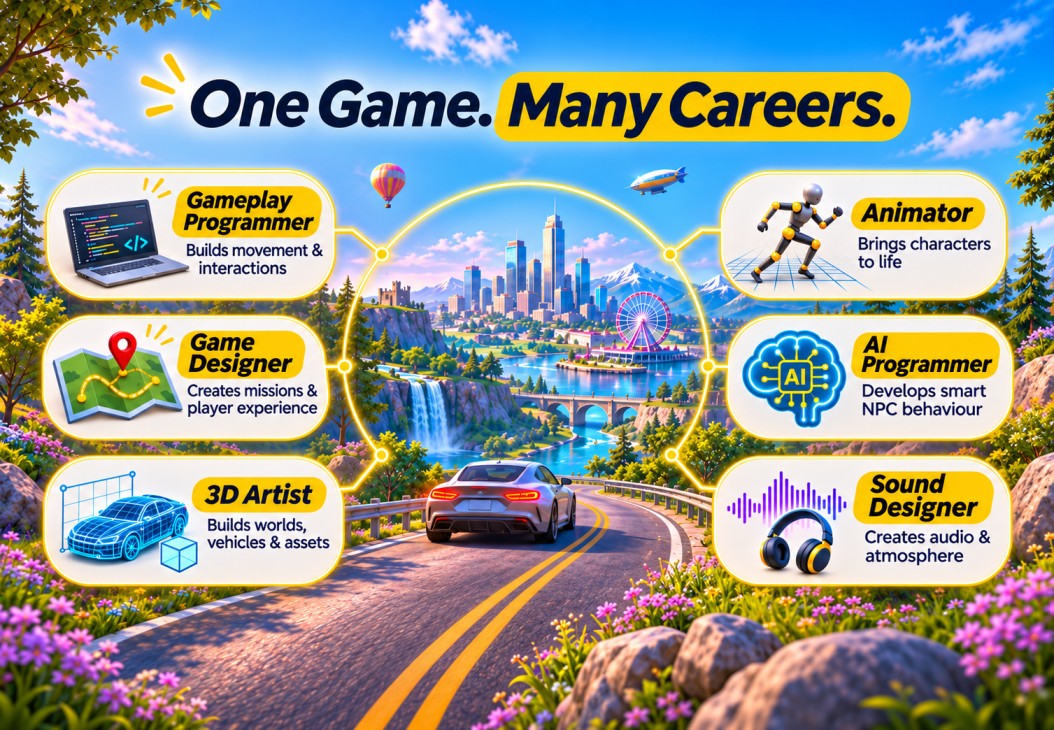
Think about the elements involved when a character walks through a virtual city:

  • Game programmers develop the systems that control movement, interactions and gameplay.
  • 3D artists create buildings, roads, vehicles and other environmental assets.
  • Animators bring characters and objects to life through movement.
  • Game designers develop missions, challenges and player experiences.
  • AI programmers create systems that control non-player character behaviours.
  • Sound designers develop audio effects, environmental sounds and interactive audio.
  • Quality assurance teams identify technical problems and test gameplay.

Large game productions also involve writers, producers, technical artists, user experience specialists and many other professionals.

This means there is no single educational pathway into the gaming industry.

The right degree depends on which part of game creation interests you most.

2. Game Development Degrees: The Most Direct Educational Pathway

Blog image

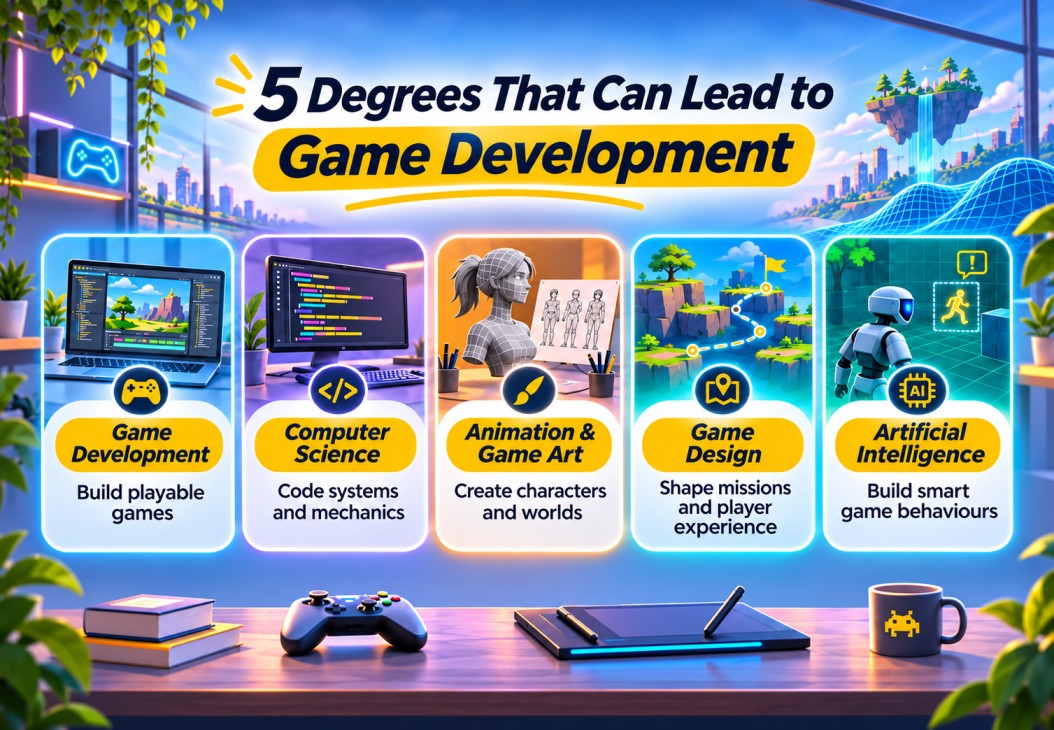
If you want to understand how video games are designed, programmed and produced, a specialised game development degree may be worth exploring.

These programmes typically combine technical knowledge with practical game creation.

What Will You Learn?

Depending on the university, a game development curriculum may include:

  • Game programming fundamentals.
  • Game engines and interactive systems.
  • Game mechanics and level development.
  • 3D graphics and animation.
  • Artificial intelligence for games.
  • Mathematics and physics for interactive environments.
  • Game testing and debugging.
  • Collaborative game production.

Many programmes also require students to develop playable projects.

For example, you might create a small racing game, develop a character interaction system or design a virtual environment.

These projects help students understand how different parts of a game work together.

Who Should Consider This Degree?

A specialised game development degree may suit you if you:

  • Enjoy understanding how games work.
  • Want to combine technology with creativity.
  • Are interested in building playable experiences.
  • Prefer practical project-based learning.
  • Want exposure to different aspects of game production.

However, course content differs between universities. Some programmes focus heavily on programming, while others emphasise design and creative production.

3. Computer Science: For Students Who Love Coding and Game Technology

Have you ever wondered how games manage complex movement, large virtual environments or interactions between thousands of digital objects?

Computer science provides many of the technical foundations needed to develop software systems, including video games.

What Does a Computer Science Degree Cover?

Students generally study subjects such as:

  • Programming languages.
  • Data structures and algorithms.
  • Software engineering.
  • Computer graphics.
  • Operating systems.
  • Mathematics and computational problem-solving.
  • Databases and networking.
  • Artificial intelligence fundamentals.

Some universities also offer game programming electives or specialised game development pathways.

Career Opportunities

A computer science background can support careers such as:

  • Gameplay programmer.
  • Game engine developer.
  • Graphics programmer.
  • Tools programmer.
  • Software engineer.
  • Game AI programmer.
Why consider computer science?

It provides a broad technical foundation that can also be applied outside the gaming industry.

If you’re interested in game programming but want to retain flexibility to explore other software-related careers, computer science may be a suitable option.

4. Animation and Game Art: For Students Who Love Visual Worlds

The visual environments in games like GTA 6 involve detailed characters, vehicles, architecture, lighting and animation.

These elements require artists and technical specialists who understand how to create digital content for interactive experiences.

If you’re more interested in how games look than how their underlying software works, animation or game art could be a better academic match.

What Will You Study?

Relevant degree programmes may cover:

3D Modelling

Creating digital representations of characters, vehicles, buildings and objects.

Character Animation

Developing movements, expressions and actions for digital characters.

Rigging

Building digital skeletons and controls that allow characters to move.

Digital Sculpting

Creating detailed three-dimensional models using specialist software.

Lighting and Rendering

Working with light, materials and visual effects to develop realistic or stylised environments.

Real-Time Graphics

Preparing digital assets for use within interactive game engines.

Possible Career Paths

Students may explore roles such as:

  • 3D character artist.
  • Environment artist.
  • Game animator.
  • Technical artist.
  • Lighting artist.
  • Visual effects artist.

Animation and game art degrees may also provide skills relevant to film, advertising, digital media and virtual production.

Who Should Choose This Path?

This direction may suit students who enjoy drawing, visual storytelling, character design, modelling and creating digital environments.

A strong creative portfolio can be especially important when pursuing art and animation roles.

5. Game Design: For Students Who Want to Create Gameplay Experiences

Playing a game and designing a game are very different experiences.

Game designers think about how a game should work, what players should be able to do and how different activities fit together.

They help shape the overall player experience.

What Do Game Designers Study?

Game design programmes may include:

  • Game mechanics and systems.
  • Level design.
  • Interactive storytelling.
  • Player experience and usability.
  • Game prototyping.
  • Game balancing.
  • Narrative design.
  • Project collaboration.

For example, imagine designing a mission where a player must escape from a virtual city.

A game designer might determine the mission’s objectives, possible routes, challenges, player choices and success conditions.

Programmers, artists and other specialists then collaborate to help turn those ideas into a playable experience.

Possible Careers
  • Game designer.
  • Level designer.
  • Systems designer.
  • Narrative designer.
  • Technical designer.
  • Gameplay designer.

Game design may suit you if you enjoy creative problem-solving, building rules and experiences, and understanding what makes gameplay engaging.

However, game design degrees vary widely, so reviewing the actual curriculum is essential.

6. Artificial Intelligence: For Students Interested in Smarter Game Systems

Modern games often contain computer-controlled characters that move through environments, react to events and interact with players.

Developing these behaviours can involve artificial intelligence techniques.

Students interested in creating intelligent gameplay systems can explore computer science, artificial intelligence or specialised game AI subjects.

What Skills Are Relevant?

Useful academic topics include:

  • Programming and algorithms.
  • Mathematics and logic.
  • Pathfinding and navigation.
  • Decision-making systems.
  • Behaviour trees and state machines.
  • Artificial intelligence fundamentals.
  • Machine learning, where relevant.

It is important to understand that game AI does not always involve machine learning or generative AI.

Many games use programmed rules and algorithms to create responsive character behaviours.

Where Can These Skills Lead?

Students may pursue roles in game AI programming, software development, simulation or other computing-related fields.

An AI degree can provide valuable technical knowledge, but students should check whether the programme includes practical applications relevant to interactive entertainment.

7. Universities Offering Game Development-Related Degrees

Several international universities offer programmes focused on game technology, design and interactive entertainment.

Here are some examples worth researching.

Abertay University, Scotland

Programme: BSc (Hons) Computer Games Technology

Abertay University offers a technically focused degree covering areas such as programming, graphics, artificial intelligence, mathematics and game engine development.

The programme includes practical development work and opportunities for students to strengthen their technical skills.

It may be particularly relevant to students interested in game programming and underlying game technology.

University of Utah, USA

Programme: Bachelor of Science in Games

The University of Utah offers a multidisciplinary games degree through its Division of Games.

The programme combines game development knowledge with opportunities to explore areas such as game design, game art, technical art and production.

It is designed for students interested in games and related interactive applications.

Rochester Institute of Technology, USA

Programme: BS in Game Design and Development

Rochester Institute of Technology offers a programme focused on the design and development of interactive games.

Its curriculum combines technical coursework with practical game creation and project experience.

Students interested in both programming and interactive game development may find this pathway relevant.

University of Southern California, USA

Programme: BFA in Game Development and Interaction Design

The University of Southern California offers a game-focused programme that combines design, interactive experiences and practical project development.

Students can explore creative aspects of game production while developing collaborative and technical skills.

How Should You Compare These Universities?

Do not choose a university only because it is popular within the gaming industry.

Review its curriculum, available specialisations, facilities, admission requirements, tuition fees and practical learning opportunities.

Also confirm that the programme matches your intended career. A degree focused on game art may not provide the same programming preparation as a computer science programme.


8. What Skills Matter Beyond Your Degree?

A university degree can provide valuable knowledge, but game development also requires practical skills.

Employers may assess your ability to solve problems, collaborate and demonstrate completed work.

Programming and Technical Skills

If you want to become a programmer, focus on writing code, debugging and understanding algorithms.

Languages such as C++ and C# are useful in different game development environments.

Creative and Design Skills

Students interested in animation or game design should develop their understanding of visual communication, player experience and digital production.

Game Engine Knowledge

Game engines provide tools for creating interactive experiences.

Students can explore platforms such as Unity or Unreal Engine to understand how games are assembled and tested.

Teamwork

Game development is collaborative.

Programmers, artists, designers and testers must coordinate their work to produce a complete experience.

Portfolio Development

A portfolio can demonstrate what you know how to create.

Depending on your specialisation, it might include:

  • Playable game prototypes.
  • Programming projects.
  • 3D models and environments.
  • Character animations.
  • Level design examples.
  • Technical demonstrations.

A few well-executed projects can be more useful than many unfinished ones.

9. How to Choose the Right Degree for Your Interests

Blog image

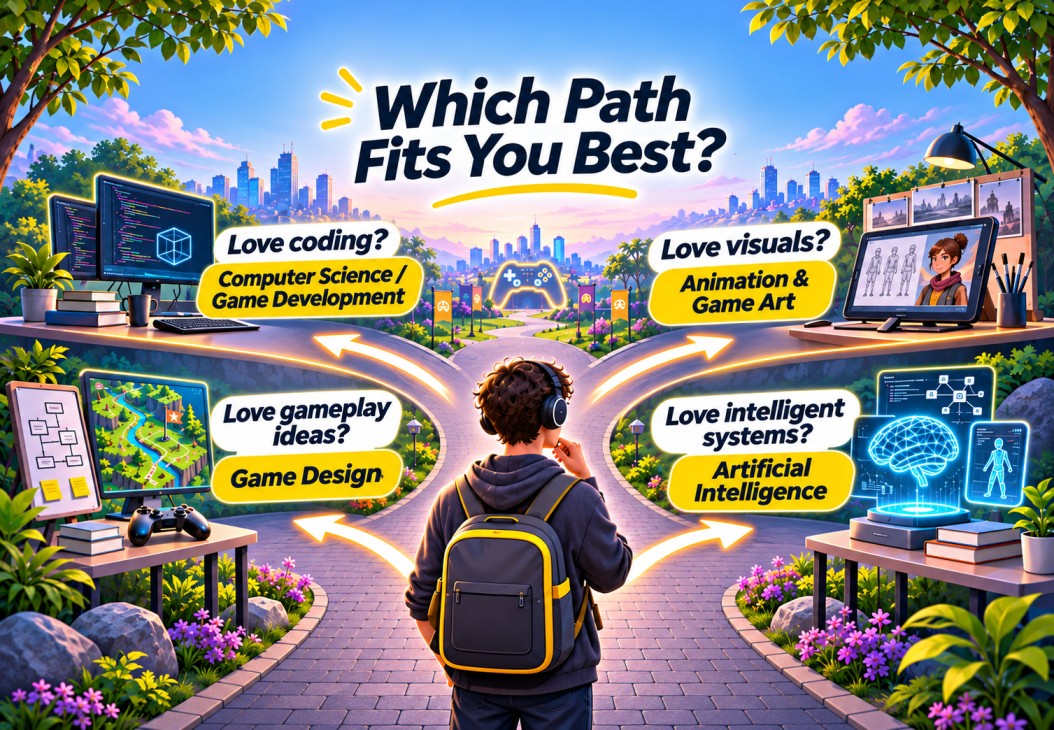
If you’re unsure which programme to pursue, start by identifying what you enjoy most about video games.

If You Enjoy Coding and Solving Technical Problems

Explore computer science, software engineering or technically focused game development degrees.

If You Love Characters, Graphics and Realistic Environments

Consider animation, game art, digital media or visual effects programmes.

If You Enjoy Designing Missions and Gameplay

Look into game design, interactive media and game development programmes.

If You’re Fascinated by Intelligent Characters

Research computer science or artificial intelligence programmes with relevant game-related subjects.

If You Enjoy Storytelling and Creative Direction

Explore interactive media, game narrative, digital storytelling or related creative degrees.

The most suitable option depends on your academic strengths, interests and long-term professional goals.

10. Can You Start Learning Game Development Before University?

Blog image

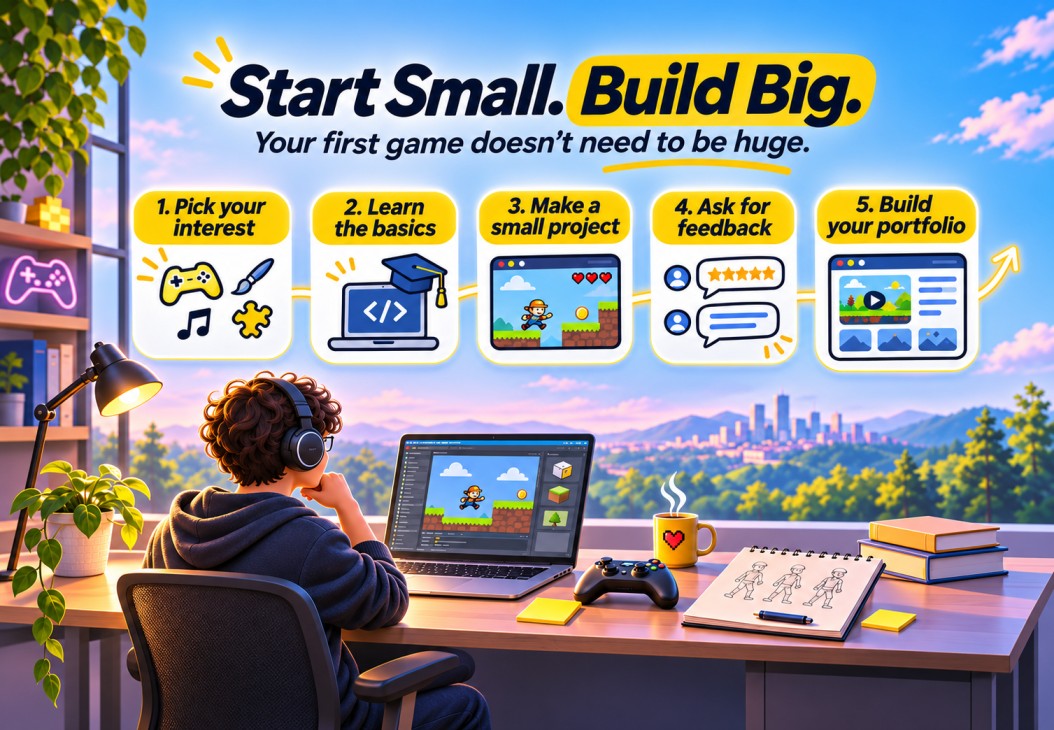
Yes. Students can begin exploring game development through beginner projects and online learning resources.

You do not need to build a massive open-world game to understand the basics.

Step 1: Choose an Area That Interests You

Start with programming, animation, game design or digital art.

Step 2: Learn the Fundamentals

Develop a basic understanding of the tools and concepts used in your chosen area.

Step 3: Create a Small Project

Try building a simple game, designing an interactive environment or developing a character animation.

Step 4: Document Your Work

Record the process, challenges and improvements you make.

Step 5: Research University Programmes

Compare degree content and entry requirements to understand which academic pathway could help you advance.

Starting early can also help you discover whether you enjoy the process of creating games, not just playing them.

How My Study Offers Can Help

Enjoying games like GTA 6 might reveal an interest in programming, animation, interactive storytelling or creative technology. The challenge is understanding which academic pathway matches those interests.

My Study Offers is a global education platform that helps students discover relevant universities and degree programmes across different countries. Whether you’re considering computer science, game design or animation, Mysto can help you compare curricula, explore admission requirements and understand how different qualifications connect with your career goals.

Through personalised education counselling, you can make a more informed choice about the skills you want to develop and the programme that best supports them.

Visit mystudyoffers.com to explore your options and speak with an expert advisor.

Conclusion

GTA 6 is more than an exciting title for gaming enthusiasts. It also offers a reason to explore the creative and technical disciplines involved in developing complex interactive worlds.

From software engineers building gameplay systems to artists designing environments and animators creating character movements, modern game development requires a wide range of expertise.

Students interested in this field can explore specialised game development degrees, computer science, animation, artificial intelligence and interactive design.

The best academic pathway depends on what you want to create and the skills you enjoy developing.

You don’t have to build the next GTA 6 to start a career in game development. You just have to start learning how games are made.

FAQs

Q1. What should I study to create games like GTA 6?

You can explore degrees in game development, computer science, software engineering, game design or animation. The most suitable degree depends on whether you want to work on programming, gameplay design, digital art or another aspect of game production.

Q2. Is computer science a good degree for game development?

Yes. Computer science provides foundations in programming, algorithms, mathematics and software development. These skills can be relevant to gameplay programming, graphics development, game engines and other technical roles.

Q3. Can I become a game developer without a game development degree?

Yes. People from different educational backgrounds can develop skills relevant to the gaming industry. Computer science, animation, design and related degrees can provide useful foundations. Practical experience and a strong portfolio are also important.

Q4. Which universities offer game development degrees?

Universities such as Abertay University, the University of Utah, Rochester Institute of Technology and the University of Southern California offer game-related programmes. Students should verify current course availability, entry requirements and curricula before applying.

Q5. Do I need to know programming to study game design?

Not every game design programme requires advanced programming knowledge before admission. However, some include programming and technical subjects. Students should review individual university requirements and course content.

Q6. Is game development a good career option?

Game development offers opportunities across programming, design, animation, audio, production and testing. However, the industry can be competitive, and employment is not guaranteed. Students should consider their interests, practical skills and the availability of suitable roles.

Q7. What is the difference between game design and game development?

Game design focuses on gameplay concepts, mechanics, rules and player experiences. Game development is the broader process of creating a playable game through programming, art, animation, audio, testing and other disciplines.

Q8. Can I study game development abroad?

Yes. Universities in several countries offer game development and related technology programmes. Admission requirements, programme content, tuition fees and opportunities vary by institution, so students should compare options carefully before deciding.

Share This Article

Similar Articles

Study Abroad
How Parents Can Financially Plan for Their Child’s Study Abroad Dream

A practical financial planning guide for parents to support their child’s dream of studying abroad-early savings, scholarships, and expert help.

Calender icon 23/07/2025
Tarang Patel
Study in Netherlands
English-Taught Degrees in the Netherlands: Admissions, Costs, and Career Pathways

 Discover English-taught programs, affordable costs, and career pathways in the Netherlands. Your guide to studying in 2025!

Calender icon 14/08/2025
Tarang Patel
Education Updates, Study Abroad
Union Budget 2026 Makes Sending Money Abroad Easier for Indian Students

Union Budget 2026 proposes a reduction in TCS on overseas education remittances under LRS, easing upfront financial pressure for Indian…

Calender icon 02/02/2026
Tarang Patel

Leave Comments

No comments yet. Be the first to leave a comment!