
South Korea: K-Culture Meets World-Class Engineering and One of the Globe’s Most Generous Scholarships   

Blog Profile Image

Tarang Patel

icon image

26/06/2026

icon image

342 Views

icon image

0

Blog Profile Image

Tarang Patel

icon image

26/06/2026

icon image

342 Views

icon image

0

South Korea is where K-culture meets world-class engineering. Seoul is the world’s 1st student city. KAIST ranks 47th globally. And the Global Korea Scholarship (GKS) covers 100% of the costs: tuition, airfare, a monthly stipend, Korean-language training, and health insurance.

Why Is South Korea Worth Considering?

Blog image

Because it delivers something genuinely rare: world-ranked universities, very affordable tuition, and a government scholarship that covers everything in a country that is simultaneously one of Asia’s most dynamic economies and one of its most culturally exciting places to live.

For students considering study in South Korea, the country’s appeal extends far beyond K-pop and K-dramas. International student numbers have grown from just over 22,000 in 2005 to more than 208,000 in 2024, while Seoul has been ranked the world’s top student city by QS. Combined with world-class universities and direct links to global companies such as Samsung, Hyundai Motor Company, and LG, South Korea offers a powerful mix of academic quality, innovation, and career opportunities.

The Global Korea Scholarship (GKS), one of the world’s most comprehensive fully funded government awards, makes all of this accessible at zero cost for selected students.

South Korea is best suited for students targeting engineering, computer science, AI, robotics, materials science, or business, the fields where Korean universities most clearly outperform their cost. And for students willing to learn Korean, the career options after graduation expand dramatically.

Where Do South Korea's Universities Rank?

The top universities to study in South Korea are known for strong academics, research excellence, and close industry links.

Seoul National University (SNU)

  • QS 2026 Rank: 31st globally
  • Known For: Engineering, Medicine, Law, Business, Sciences

KAIST

  • QS 2026 Rank: 47th globally
  • Known For: Engineering, CS, AI, Robotics; Asia’s MIT

Yonsei University

  • QS 2026 Rank: 62nd globally
  • Known For: Business, Medicine, International Studies

Seoul National University (SNU)

  • QS 2026 Rank: 31st globally
  • Known For: Engineering, Medicine, Law, Business, Sciences

Korea University

  • QS 2026 Rank: 74th globally
  • Known For: Business, Law, Engineering

POSTECH

  • QS 2026 Rank: 94th globally
  • Known For: Physics, Materials Science, Chemical Engineering

Sungkyunkwan University (SKKU)

  • QS 2026 Rank: 116th globally
  • Known For: Business, Engineering (Samsung partnership)

UNIST

  • QS 2026 Rank: 166th globally
  • Known For: Engineering, Energy, Computer Science

NOTE: KAIST operates almost entirely in English, making it the most accessible top-ranked Korean university for international STEM students. The SKY universities (Seoul National University, Korea University, and Yonsei University) are South Korea’s most prestigious trio. All are eligible for GKS.

What Can You Study?

Blog image

South Korea’s universities are strongest in:

  • Engineering and Technology: Electrical, Mechanical, Software, AI, Robotics, Semiconductor Engineering, Chemical Engineering (KAIST, POSTECH, SNU, UNIST)
  • Computer Science and AI: CS, Machine Learning, Data Science, Cybersecurity (KAIST, POSTECH, SNU)
  • Business and Management: Business Administration, Finance, International Business (SKY universities, SKKU)
  • Medicine and Life Sciences: Medicine, Dentistry, Biomedical Sciences (SNU, Yonsei)
  • Arts, Design and K-Culture: Game Design, Film, Media, Industrial Design with direct links to Korea’s entertainment and tech industries

Most master’s and doctoral STEM programmes at KAIST, POSTECH, and the SKY universities are available fully in English.

What Are the Entry Requirements?

Academic Requirements
  • Undergraduate (GKS-U): Completed high school; minimum 80% GPA or top 20% of class; under 25 years old
  • Postgraduate (GKS-G): Relevant bachelor’s (for master’s) or master’s (for PhD); minimum 80% GPA; under 40 years old
  • General admission: Minimum 60–70% depending on the university and programme
English Requirements
  • IELTS: 5 – 6.5, depending on university and programme

  • TOEFL iBT: 71 – 90

Korean proficiency is not required; application for GKS language training is included. For general admissions, TOPIK Level 3+ is typically needed for Korean-medium undergraduate programmes.

What Does It Cost?

Tuition Fees

Annual tuition at Korean universities is among the lowest for world-ranked institutions globally.

  • National universities (SNU, KAIST, POSTECH): KRW 3,000,000 – 5,000,000
  • Private universities (Yonsei, Korea, SKKU): KRW 5,000,000 – 8,000,000
  • Medical / Dental: KRW 8,000,000 – 12,000,000
Living Costs in Seoul

International students in South Korea should budget approximately KRW 9.6 million–18 million per year for living expenses, depending on their city, accommodation choice, and lifestyle. While Seoul offers the widest range of academic and career opportunities, it is also the country’s most expensive student city.

Students looking to reduce costs may find excellent alternatives in university cities such as Daejeon (home to KAIST), Pohang (home to POSTECH), and Ulsan (home to UNIST). These cities generally offer lower accommodation, transport, and day-to-day living costs while still providing access to some of South Korea’s most prestigious universities and research institutions. For budget-conscious students, choosing the right city can significantly reduce the overall cost of studying in South Korea.

The Global Korea Scholarship (GKS): The Full Picture

The GKS is South Korea’s flagship government scholarship for international students, managed by NIIED under the Ministry of Education. For students planning to study in South Korea, it is one of the most prestigious and comprehensive funding opportunities available. In 2026, 2,000 students will be selected globally, with 800 places allocated through the Embassy Track and 1,200 places through the University Track, providing international students with a pathway to pursue undergraduate, master’s, doctoral, and research programmes at leading universities across South Korea.

What GKS Covers: 100% of Everything

Tuition fees:

  • Up to KRW 5,000,000/semester
  • NIIED pays up to this amount; the university covers any excess

Monthly living allowance:

  • KRW 1,380,000/month (₹86,940)
  • Increased significantly for 2026 master’s/PhD students

Korean language training:

  • KRW 12,840,000/year
  • 1 full year of intensive Korean, fully funded

Round-trip airfare:

  • Actual economy class cost
  • Arrival and departure

Settlement allowance:

  • KRW 200,000 (one-time)
  • On arrival

Degree completion grant:

  • KRW 100,000 (one-time)
  • On graduation

Research allowance:

  • KRW 210,000 – 240,000/month
  • Humanities vs. STEM, in addition to a living allowance

Korean proficiency grant:

  • +KRW 100,000/month
  • If you achieve TOPIK Level 5 or 6 during your degree

Health insurance:

  • Full coverage
  • Group insurance for the scholarship duration

NOTE: The GKS living stipend was significantly increased for 2026 to KRW 1,380,000/month (~₹86,940) for master’s and PhD students. This is a genuine improvement that makes the scholarship even more livable, particularly in Seoul. Adding the research allowance of KRW 210,000–240,000/month, the total monthly income for a GKS graduate scholar can reach approximately KRW 1,590,000–1,620,000/month (~₹1,00,170–₹1,02,060), enough to cover all living costs comfortably in most Korean cities.

Who Can Apply for GKS?

Criteria: Nationality

  • Undergraduate (GKS-U): Non-Korean, both parents non-Korean
  • Graduate (GKS-G): Same

Criteria: Age

  • Undergraduate (GKS-U): Under 25 (born after March 1, 2001, for 2026 cycle)
  • Graduate (GKS-G): Under 40

Criteria: Academics

  • Undergraduate (GKS-U): High school graduate; min. 80% GPA or top 20%
  • Graduate (GKS-G): Bachelor’s/Master’s degree; min. 80% GPA

Criteria: Korean language

  • Undergraduate (GKS-U): Not required; training included
  • Graduate (GKS-G): Not required; training available

Criteria: Health

  • Undergraduate (GKS-U): Good health medical exam required
  • Graduate (GKS-G): Same
Two Application Tracks
  • Embassy Track: Apply through the Korean Embassy in your home country. Up to 3 university preferences. Deadline: March each year for graduate programmes; check your country’s Korean Embassy for exact dates.
  • University Track: Apply directly to a specific participating Korean university. One university only. Deadline: varies by university, typically September.

NOTE: In 2026, the Embassy Track application window for graduate programmes was September 15–30, 2025, with first-round results announced in late October 2025. For the 2027 cycle, the Embassy Track will open approximately early to mid-2026. Check the official NIIED portal at studyinkorea.go.kr and your local Korean Embassy for confirmed dates.

What Other Scholarships Are Available?

KAIST Undergraduate Scholarship

  • Value: Full tuition waiver + KRW 100,000–300,000/month
  • Who It’s For: High-achieving international undergraduates at KAIST

SNU International Scholarship

  • Value: Partial to full tuition
  • Who It’s For: Seoul National University merit-based

Yonsei International Scholarship

  • Value: Up to 100% tuition
  • Who It’s For: Yonsei University merit-based

Korea University Scholarship

  • Value: Up to 100% tuition
  • Who It’s For: Korea University merit-based

POSTECH Scholarship

  • Value: Full tuition + research allowance
  • Who It’s For: POSTECH STEM students

NRF Research Scholarships (PhD)

  • Value: Full funding through research grants
  • Who It’s For: Doctoral students embedded in funded research projects

What About Work Rights and Post-Study?

During Study

Students on a D-2 visa can work up to 20 hours per week during the term and full-time during official holidays. A work permit application to the immigration office is required for off-campus employment. On-campus research assistant and tutoring roles may have different rules.

Post-Study D-10 Job Seeking Visa

After graduating, students can apply for the D-10 Job Seeking Visa, allowing them to stay in South Korea and search for qualifying employment.

  • Duration: 6 months, extendable in some cases
  • Unlimited job search in any sector
  • Can convert to an E-series employment visa once a job offer is secured

South Korea’s economy, driven by Samsung, Hyundai, POSCO, LG, Naver, Kakao, and a growing startup cluster in Pangyo (Seoul’s Silicon Valley), creates genuine graduate demand in engineering, software, data science, finance, and design.

NOTE: The D-10 at 6 months is shorter than post-study options in Australia (2–3 years), Canada (3 years), or the UK (2 years). This is South Korea’s most significant limitation for students who want maximum post-graduation flexibility. Korean language skills substantially expand the range and quality of available employment; students who complete TOPIK Level 4 or above are far better placed in the Korean job market.

What About the Visa?

Students staying more than 90 days need a D-2 Student Visa.

  • Visa Type: D-2 Student Visa
  • Visa Fee: KRW 40,000–60,000 (₹2,520–₹3,780)
  • Financial Proof: KRW 10,000,000 (~₹6.3L) recommended
  • Health Insurance: National Health Insurance (NHIS) is mandatory on arrival.
  • Work Rights: 20 hours/week during term; full-time during holidays
  • Post-Study: D-10 Job-Seeking Visa 6 months
  • Processing Time: 2–4 weeks

What Is Campus Life and Student Life Like?

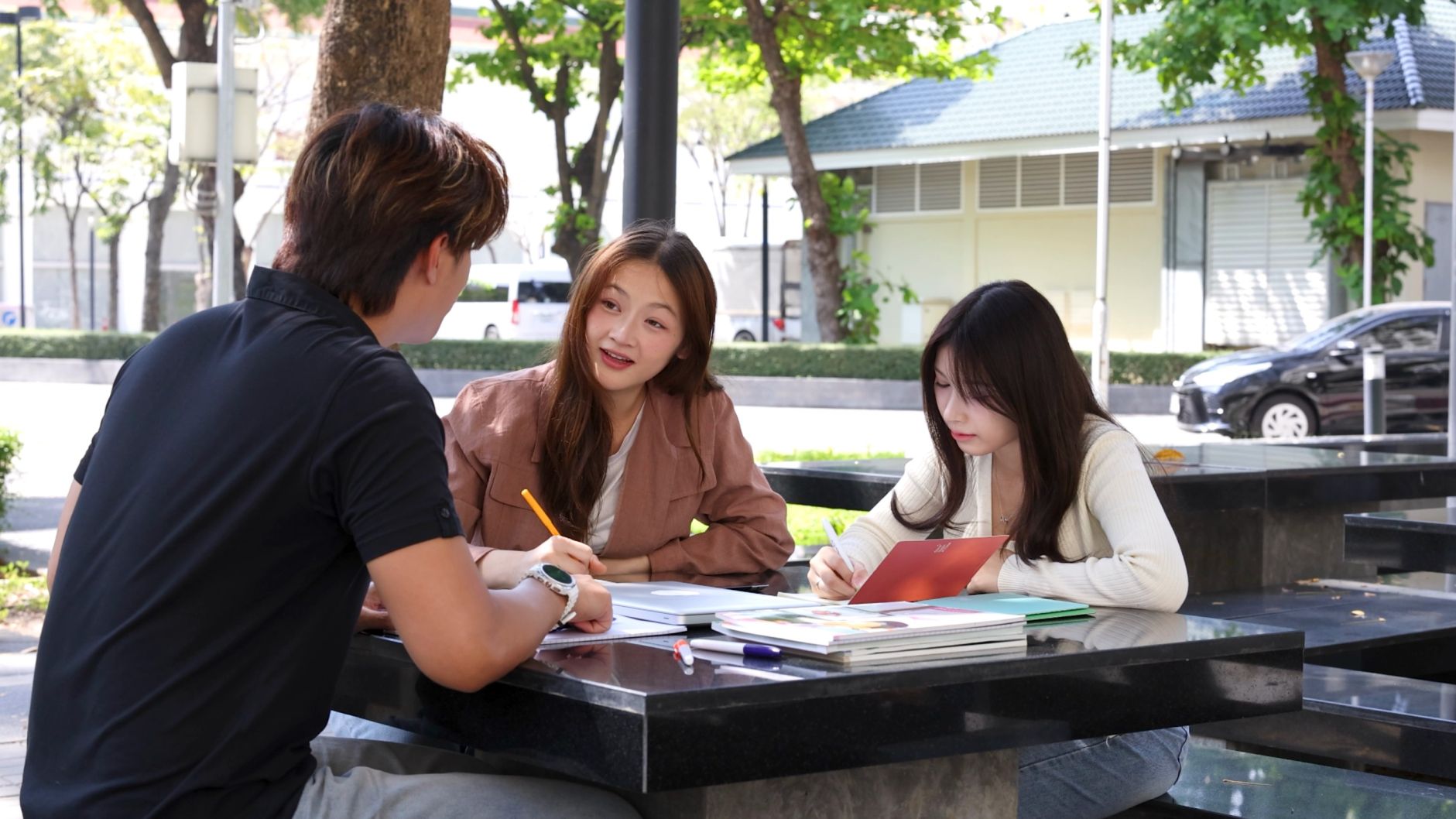
Seoul is ranked the 1st student city in the world by QS, above London, Tokyo, and Melbourne. Fast internet, excellent public transport, world-class food culture, and a young, internationally-facing population make it one of the most energetic places to study anywhere.

The Hallyu wave is not just cultural wallpaper for students. It is an active industry: K-pop management companies, game studios, animation firms, and entertainment tech companies are all based in Seoul and actively recruit graduates in technology, business, marketing, and media. For students interested in creative and digital industries, the career ecosystem in South Korea is genuinely unique.

Korean university campuses are modern, well-resourced, and student-focused. Most have international student offices, buddy programmes, Korean language exchange clubs, and dormitory communities that help new arrivals settle in quickly. The Indian student community in South Korea is smaller than in Australia or the UK, but it is growing rapidly, particularly at KAIST, POSTECH, and the SKY universities.

What Careers Do South Korean University Graduates Pursue?

Samsung, Hyundai, POSCO, SK, LG, Naver, and Kakao all hire straight from Korean universities like KAIST, POSTECH, SNU, SKKU – which has a formal Samsung research partnership – and Yonsei. If you graduate with an engineering, computer science, materials science, or business degree, there’s constant demand for your skills.

For international students who stick around South Korea, Pangyo Techno Valley, which is like South Korea’s Silicon Valley, is just 30 minutes from Seoul and home to more than 1,300 IT and gaming firms. Plus, for those heading back home, getting a degree from KAIST, SNU, or any top-10 Korean university is now seen as a mark of real quality worldwide.

How Can We Help?

Planning to study in South Korea involves more than selecting a university. Understanding admission requirements, identifying scholarship opportunities such as the prestigious Global Korea Scholarship (GKS), preparing a strong application, and navigating the D-2 student visa process all require careful preparation and attention to detail.

My Study Offers, a free global education platform for students, provides end-to-end support throughout your study abroad journey. From shortlisting the right Korean universities and programmes to assisting with GKS applications, documentation, university admissions, and visa guidance, the platform supports students at every stage. With expert counselling and personalised support, students can confidently plan their academic journey and maximise their opportunities in South Korea’s world-class higher education system.

FAQs

1. Is South Korea a good study destination for international students?

Yes, particularly for engineering, computer science, AI, and materials science. Seoul ranks 1st globally for student cities. SNU is 31st globally, KAIST 47th. Tuition starts from ₹1.9L/year, and the GKS scholarship covers 100% of costs: tuition, flights, housing allowance, and a monthly stipend of ₹86,940 for selected students.

2. What does the GKS scholarship cover in 2026?

Full tuition (up to KRW 5,000,000/semester), monthly living stipend of KRW 1,380,000 (~₹86,940), research allowance of KRW 210,000–240,000/month, one year of Korean language training, round-trip airfare, health insurance, and settlement and completion grants.

3. How many GKS scholarships are available in 2026?

Approximately 2,000 graduate (master’s/PhD) scholarships and 367 undergraduate scholarships globally, across all participating countries.

4. Do I need to speak Korean to apply for GKS?

No. Korean language proficiency is not required at the application stage. The scholarship includes one full year of intensive, fully funded Korean language training before your degree begins. Students who already hold TOPIK Level 5 or 6 may be exempted from this year.

5. What are the GKS application deadlines?

Embassy Track for graduate programmes: typically in March each year. University Track: varies by university, typically in September. For the 2027 cycle, check studyinkorea.go.kr and your local Korean Embassy for confirmed dates.

6. What is the post-study work option in South Korea?

The D-10 Job Seeking Visa is valid for 6 months with possible extension. Graduates can work in any sector during the search period and convert to an E-series employment visa on securing a job offer. Korean language skills significantly improve employment outcomes.

7. Which university is best for engineering in South Korea?

KAIST (47th globally) teaches almost entirely in English and is South Korea’s most internationally accessible technical institution. POSTECH (94th), UNIST (166th), and SNU (31st) are also world-class for STEM.

8. Can I work while studying in South Korea?

Yes, up to 20 hours per week during term and full-time during official holidays on a D-2 student visa. A work permit from the local immigration office is required for off-campus employment.

Share This Article

Similar Articles

Study in UK
University of Manchester: Is It Worth the Investment for International Students?

For a long time, the University of Manchester has been gaining the interest of many Indian students who want to…

Calender icon 17/03/2026
Tarang Patel
Scholarships, study in Australia
Swinburne University International Scholarships   

Swinburne University in Melbourne offers two automatic merit-based scholarships for international students starting in 2026: 20% off tuition (Swinburne International…

Calender icon 11/06/2026
Tarang Patel
Scholarships, Study in UK
Study in UK Scholarships for Indian Students (2026 Updated Guide)

Explore top scholarships for Indian students to Study in UK in 2026 — including fully funded government awards like Chevening,…

Calender icon 27/02/2026
Tarang Patel

Leave Comments

No comments yet. Be the first to leave a comment!